

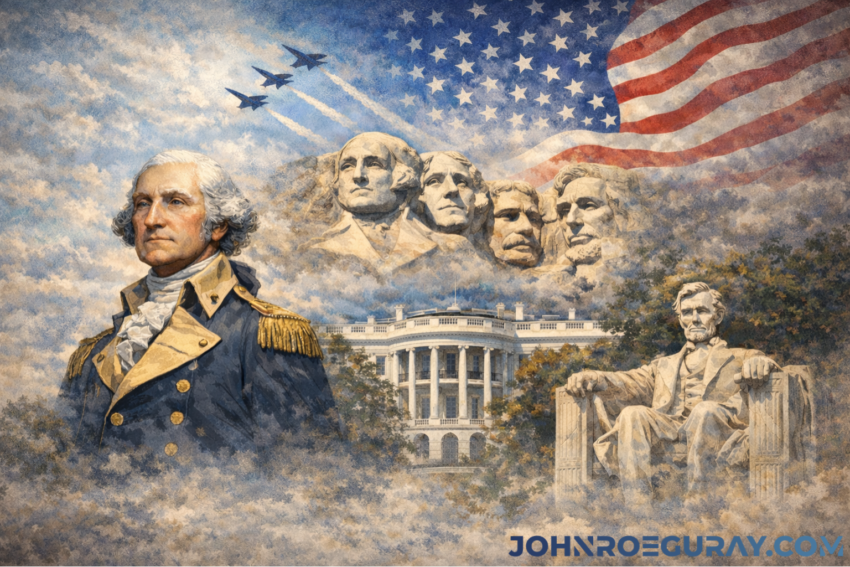
President’s Day in 2026 is more than a long weekend or retail holiday — it is a moment to reflect on leadership, national identity, and the evolving responsibilities of the American presidency. Originally rooted in honoring one individual, the holiday has grown into a broader reflection on public service, stewardship, and how leadership shapes the trajectory of a nation.
At a time when leadership is often debated, scrutinized, and redefined, President’s Day invites us to revisit foundational principles and consider what presidential leadership should represent in today’s world.
The Origins, Symbolism, and Contemporary Relevance
President’s Day traces its roots to the commemoration of George Washington’s birthday on February 22. Washington was widely revered not only as the first President of the United States but also as a symbol of unity, sacrifice, and disciplined leadership.
Over time, the observance evolved — particularly after the Uniform Monday Holiday Act in 1971 — into a broader celebration recognizing all U.S. presidents. This shift reflects a recognition that leadership is cumulative; each presidency contributes to the ongoing American story.
Today, the symbolism of President’s Day includes:
- Recognition of public service and civic responsibility
- Reflection on democratic values and institutions
- Consideration of how leadership adapts to changing social, economic, and geopolitical realities
In a rapidly shifting global landscape, the presidency represents continuity amid change — an office meant to serve not just power structures but the people themselves.
George Washington’s Vision of the Presidency
George Washington did not seek the presidency out of personal ambition. In fact, he was reluctant to assume the role. His acceptance was rooted in duty — a belief that the young republic required stable leadership guided by integrity and restraint.
Several principles defined Washington’s vision:
1. Leadership as Service
Washington viewed leadership as a responsibility, not a privilege. He emphasized humility, accountability, and the importance of serving the public interest above personal gain.
2. Institutional Stability Over Personal Authority
He was deeply concerned about avoiding monarchy-like power. By voluntarily stepping down after two terms, he set a precedent that reinforced democratic norms and peaceful transitions of power.
3. Unity Over Division
Washington consistently warned against excessive partisanship, believing it could weaken national cohesion — a warning that remains strikingly relevant today.
4. Moral Character in Leadership
He believed the credibility of the presidency depended on integrity, consistency, and ethical conduct — qualities essential for sustaining public trust.
These principles continue to shape expectations of presidential leadership even centuries later.
The Presidency: More Than Power
The presidency is often viewed through the lens of authority, influence, and decision-making power. Yet historically, its deeper purpose has been stewardship — safeguarding the nation’s institutions, fostering unity, and addressing the needs of citizens across social and economic lines.
True presidential leadership involves:
- Listening to diverse constituencies, not only political elites
- Responding to emerging societal needs
- Guiding the nation through uncertainty
- Balancing tradition with necessary change
In many ways, the presidency functions as both symbol and instrument: a symbol of national identity and an instrument for collective progress.
Meeting the Needs of the Times
Every era places unique demands on presidential leadership:
- Economic transformation and technological disruption
- Climate and sustainability challenges
- Social equity and cultural cohesion
- Global security and diplomacy
Leadership effectiveness is often measured not only by policy outcomes but by the ability to inspire confidence, foster collaboration, and articulate a compelling vision for the future.
President’s Day therefore becomes a reminder that leadership is dynamic — it must evolve while staying anchored in core democratic values.
Why President’s Day Still Matters in 2026
In today’s complex environment, the holiday’s relevance is arguably greater than ever. It encourages citizens to:
- Reflect on civic responsibility
- Evaluate leadership beyond political rhetoric
- Appreciate the sacrifices inherent in public service
- Consider how leadership affects everyday lives
It also reminds us that leadership is not confined to elected office. Communities, businesses, schools, and families all rely on principled leadership that mirrors the stewardship ideal originally envisioned for the presidency.
Leadership as Stewardship
President’s Day ultimately reminds us that the presidency is not simply about authority — it is about responsibility. George Washington’s example underscores that leadership grounded in service, humility, and commitment to the common good remains timeless.
As we observe President’s Day in 2026, the question is not only how presidents have led in the past, but how leadership at every level can rise to meet the needs of today and tomorrow.
When leadership prioritizes people over power, stewardship over status, and unity over division, the true spirit of the presidency endures.